Quote Bot via Rendered SourceInsurTech
Insurance CRM that passed SOC 2 and HIPAA audits
A CRM and sales platform for US life-insurance agencies. It holds personal and health data. I was lead architect in a team of five for five years, from the first release through the audits.
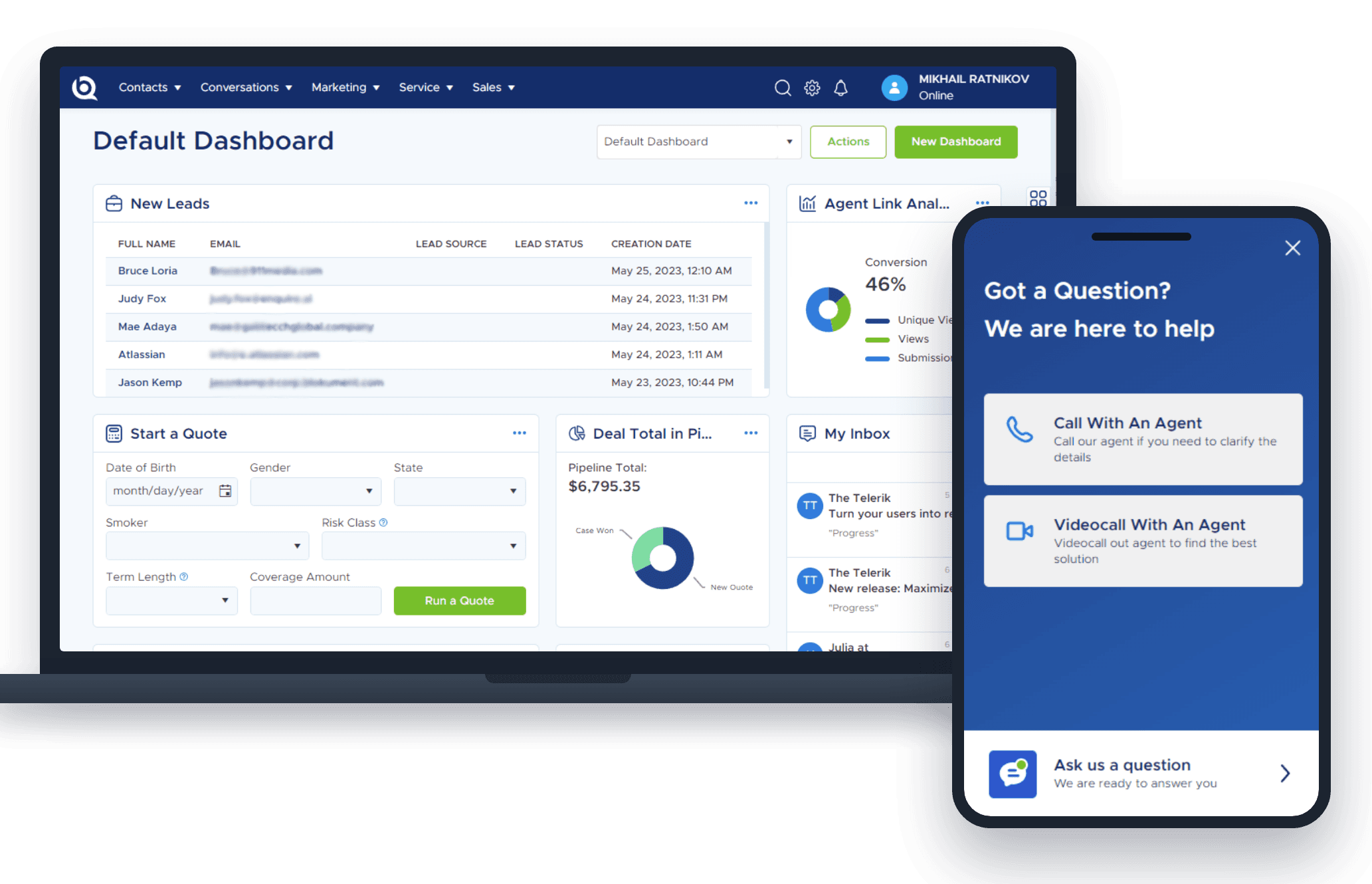
The client was replacing its old system. Insurance agencies would keep their customers' personal and health data in the new one, and the platform had to pass SOC 2 and HIPAA audits. Security had to be part of the first release, not added in a rush before the audit.
I worked on it through Rendered Source, a US software company.
I have been through SOC 2 and HIPAA audits on a live platform. In a Review, I check your product against the same controls those auditors checked.
Social Security and tax numbers
Kept on customer and policy records
Health answers
From the insurance interview
Signed applications
Back from e-signature, stored per agency
Call recordings
From the phone built into the CRM
HIPAA for the health data
SOC 2 for all of it
The same list I check in your product
Auditors asked how the platform protected data. Each answer below was built into the product from the first release. Under each one: what I look for in your product.
Customer data kept apart
Each agency had its own database, logins, app and web address. No table held two agencies' customer data.
In your product I check
Whether one customer can see another's data. In AI-built apps, one missing line is often enough.
Agency A
- Database
- Logins
- App
- Web address
Agency B
- Database
- Logins
- App
- Web address
No table holds two agencies' customer data
Admin console
Create · Release · Suspend · Delete
Who can see and change what
Three roles, with rules for own, team and team-lead records, enforced inside the database queries. No screen can show a row the user may not see.
In your product I check
Whether access rules live on the server, or only in the screens.
Secrets and API keys
26 secrets in AWS Parameter Store, none in the code. A key can change without a new release.
In your product I check
Keys and passwords in the code, in its history, or in the browser.
A record of every change
Every change logged: who, when, before and after. Opening health data needs a reason, and is logged too.
In your product I check
Whether you can answer "who changed this, and when?"
Known security flaws
The release pipeline blocks a release with a known critical or high flaw that has a fix.
In your product I check
Old libraries with known flaws, and what stops them reaching production.
Backups and rollback
Encrypted daily backups. A new version that does not start is rolled back automatically.
In your product I check
Whether a backup was ever restored, and how a bad release is undone.
New release
One version, one agency at a time
Gate 1: database changes first
If they fail, the release stops here.
Gate 2: the new version must start
It has to start and respond.
Automatic rollback
if it does not start
Live for this agency
Then the next agency
AI that stays inside its limits
The chat bot can only pick an answer the agency wrote. No match gives a safe fallback, not a guess.
In your product I check
What your AI features can say or do on their own.
ChatGPT
Picks an answer, or asks a clarifying question
Every message passes all three
Approved answers only
Reply text comes from the agency's own list
Strict reply format
Checked by code, creativity set to zero
Full chat history
Loaded from the CRM every time
No match? A safe fallback message, never a guess.
What the system costs to run
I moved the deal-scoring model off a paid, always-on AWS endpoint into the app. That bill is gone.
In your product I check
Monthly cloud and AI services you do not need.
Five years of change on one foundation
5 years
on one platform
659
database changes
.NET 8
upgraded from .NET Core in place
0
rewrites
Options, not orders
Goals came from the CEO. I came back with options, trade-offs and a budget view, then built the one the CEO chose.
Small, safe releases
Releases went out one agency at a time. A failed database change stopped the release, and a version that did not start was rolled back.
Rules in writing
I wrote the architecture, security, testing and review standards into the repository. The team and the AI coding tools read the same rules.
This is how I fix a product after a Review. Your stack stays. Fixes go out in small releases you approve, and every release can be rolled back.
What agents, customers and agency owners got
For agents
- Calls, SMS, video, email and live chat on one timeline per customer
- A shared team inbox, updated live
- Two-way email sync with Gmail, Outlook and other mailboxes
- Sales pipelines with a win probability on every open dealAI
- Policy cases with an underwriting checklist and documents
- Call transcripts with summariesAI
- Meeting summariesAI
- An assistant that helps agents fill in formsAI
For customers
- Buy a life-insurance policy online, without an agent
- Sign the application online, insured and payor each with their own link
- Chat on the agency's website, answered only with approved answersAI
- Card numbers never touch the CRM: the payment token goes straight to the insurer
For agency owners
- Their own environment, created and released from one admin console
- Dashboards agents build themselves, with CSV and Excel export
- Chat bot answers the agency writes, tested before go-live
- Email campaigns from a template library
- A log of every change, every login and every look at health data
Technologies
Application
Cloud
AI
Integrations
What the client said
“Michael is in the top 1% of any architect we have worked with.”
“Working with Michael is in the top 1% of any experience my company has had with hundreds of developers. He is a leader with good judgement, highly technical, very kind and as honest as they come. I don't think I could recommend anyone more highly. The technical abilities were of the highest caliber, but architecturally and feature suggestions saved a lot of money and time. I have a software development background and the end results we achieve are in the top echelon of any system I've been involved with.”

Is a deadlinecoming?
A round, an audit, a big customer, a vendor contract. Book a 30‑minute Risk Assessment Call. We go through who built your product, what must be ready before that date, and what breaks today.
Free. No preparation. You leave with your 3 biggest risks in writing, and an honest answer on whether a review is worth it now.